Accredited training
892 past trainees and no renewal process
Every one of them had already paid once. Their certificates expire. Nobody was telling them.
Live, and being measured.
What happened
Before, and after
Before
892 historical trainees sitting in a CRM with nothing attached to them. Renewal happened only when somebody happened to remember a name.
Where it leaked
The cheapest revenue in the business, people who had already bought once, going to whichever provider contacted them first. Roughly half the records also had no marketing consent, so the usable list was smaller than it looked.
Diagnosis
Not a marketing problem, a missing system. And one person renewing is no use to them, because a session needs around ten people to run. So the unit had to be the organisation, not the individual.
The system
Expired certificates grouped by employer, the key contact approached to fill a whole session, a consent check on every record that cannot be relaxed, send caps, and automatic follow ups that stop the moment somebody replies or books.
Implementation
Their mail platform would not allow automated sending, so rather than wait on their IT provider we built a dedicated sending mailbox on separate infrastructure, with replies still landing in his normal inbox. Authentication set up across both so the domain stays safe. Then the sequence, the reply tracker and a daily summary of exactly who was contacted.
Result
The engine is live and sending. 892 records are now on a renewal cycle that runs whether or not anyone remembers. Reactivation numbers are being measured over the current campaign and will be published here when they are real.
The evidence
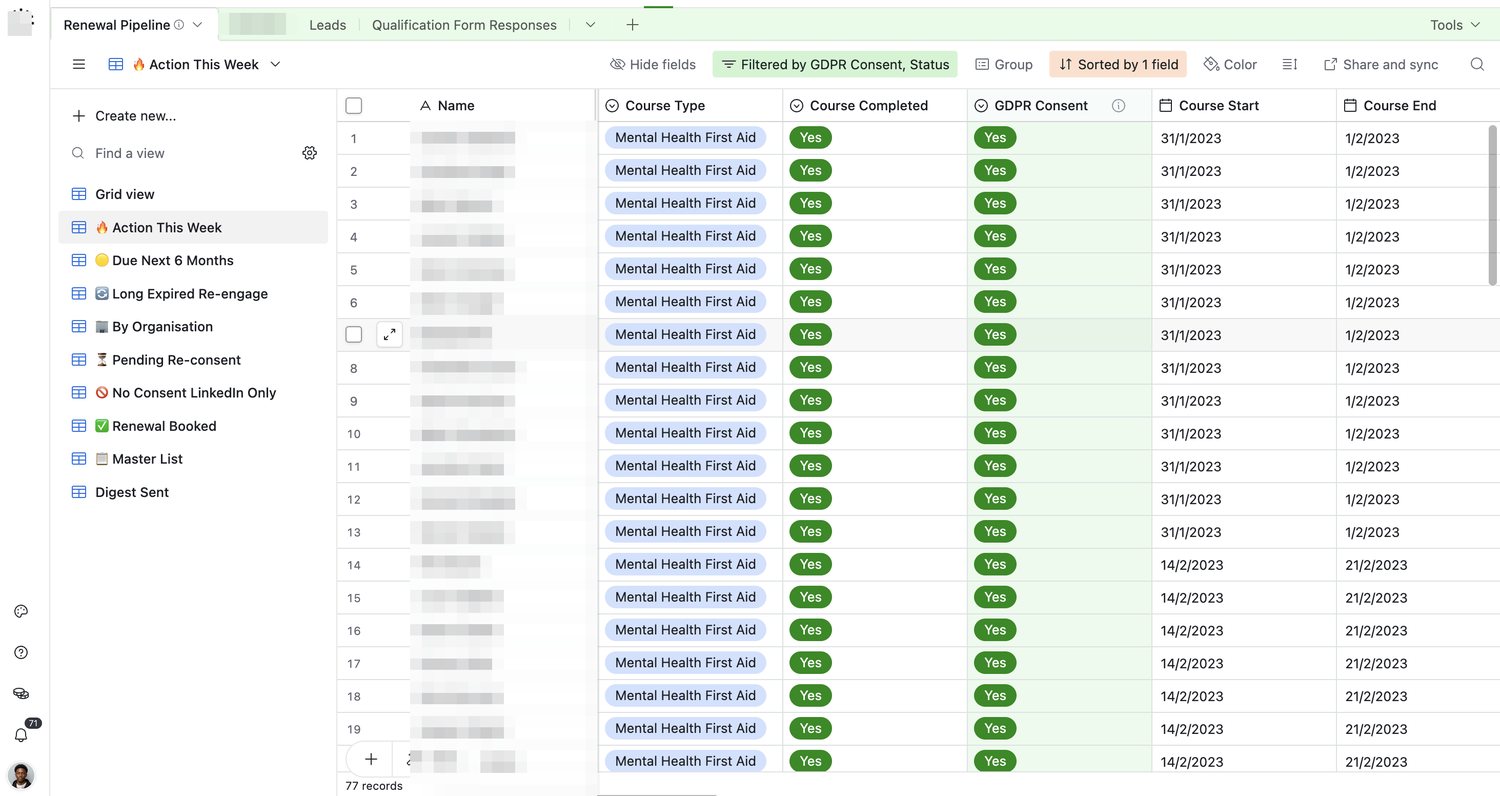
This is the system running
Not a mockup. Every real name was destroyed before this image was made, and it cannot be read back.
Underneath
The flows behind it
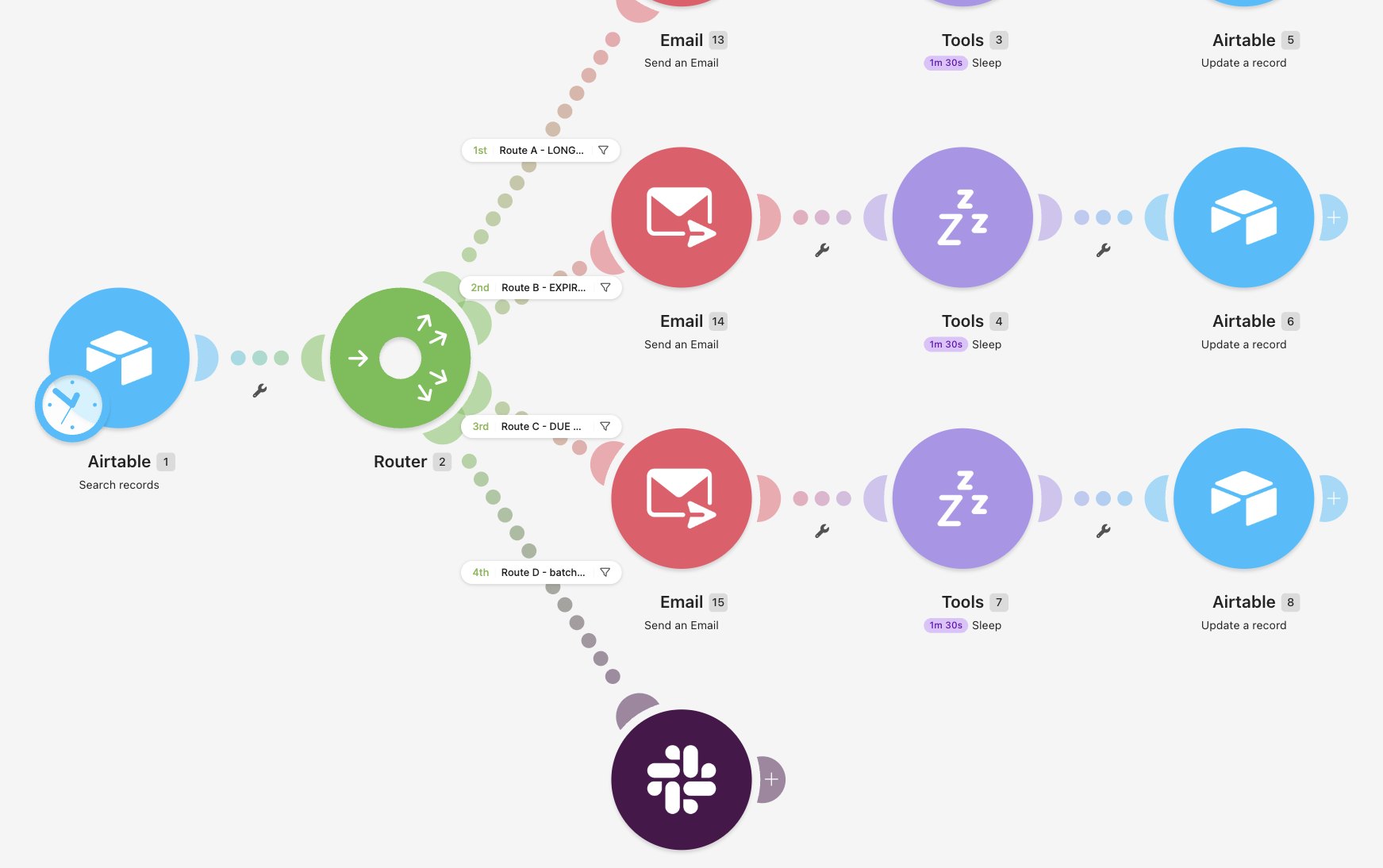
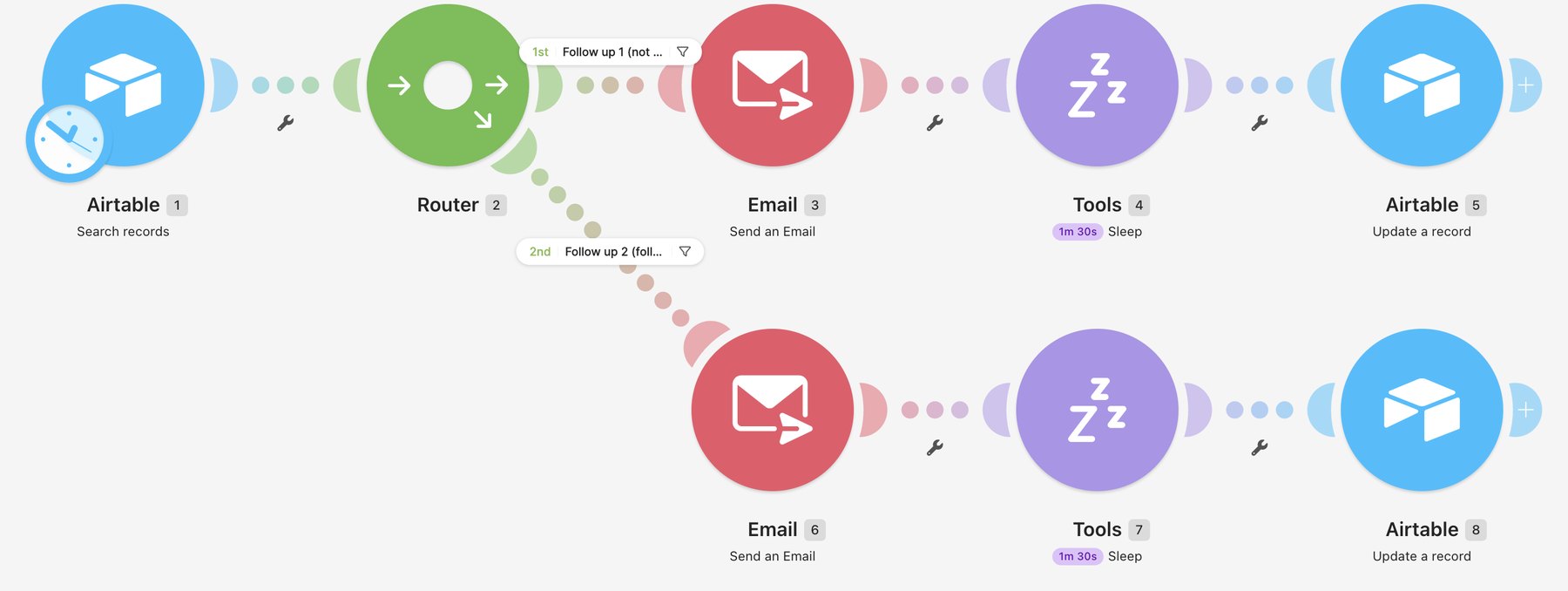
These are the real builds, straight off the canvas. Each flow does a single job, so a failure in one does not take the rest down with it.
Grouped by employer, not by person
Expired certificates are gathered by the organisation that paid for them, because a session needs around ten people before it can run at all.
Consent is checked before anything else
No record without marketing consent is ever contacted. That rule sits in front of every flow and cannot be relaxed by anyone, including us.
Sending is capped and paced
A fixed number per run with a pause between each one, from dedicated infrastructure, so the client's domain reputation is never spent.
Follow ups that know when to stop
A second note, then a final one, both on a schedule. Both stop immediately if the person replies or books.
Replies are tracked, not hunted
Every reply is detected, written back to the record and posted to the team, so nobody is ever contacted twice.
A daily account to the client
A summary of exactly who was contacted that day reaches them every morning, so the system is auditable rather than a black box.
Five separate flows with the consent check sitting in front of all of them. Their legal exposure was the first thing we designed around, not the last.
Commercial value
A renewal cycle that did not previously exist, running on a list they already owned, with the consent rule protecting them rather than exposing them. We will put the recovered revenue here once the campaign reports it, and not before.